Webflow Cloud applications and product layers.
Webflow Cloud is recommended when the Webflow connection is strategically useful. If the product layer does not need to live inside the Webflow ecosystem, Fred will usually recommend a simpler standalone Astro, Next.js, Cloudflare or Vercel route.
When Webflow needs an application layer Keep Webflow for the brand. Move the logic where it belongs.
Webflow is excellent for visual websites, editorial control and polished marketing experiences. Some projects need more: external data, custom filtering, server-rendered pages, API integrations, search, gated previews or product logic. Webflow Cloud is useful when that application layer benefits from living close to an existing Webflow site.
Webflow stays useful
The marketing site, brand pages and editorial surface can stay in Webflow, where teams already have visual control.
Data gets a proper layer
Structured data, APIs, dynamic routes, filtering and search sit in an Astro and React application layer instead of forcing Webflow CMS to act like a database.
Scope stays focused
The first release is shaped around the smallest useful product layer: enough to prove value, index well and support a real launch.
Architecture stays honest
Fred chooses Webflow Cloud when it fits, and recommends another route when authentication, data, compliance or long-term product needs point elsewhere.
What we build Focused product layers around Webflow.
Data products
Public or gated data experiences with search, filtering, dynamic routes and database-backed content.
Job boards & API listings
Greenhouse, Lever or custom API integrations rendered inside the Webflow ecosystem with SEO-friendly pages.
Searchable directories
Company databases, partner directories, resource libraries and structured content systems that outgrow Webflow CMS.
Programmatic SEO platforms
Template-driven pages generated from structured data, designed for indexability, performance and controlled content growth.
Custom product layers
Focused application logic that sits alongside the marketing site without forcing the full project into a heavy product stack.
From product layer to launch Clarify, build, connect and extend.
Clarify the product layer
Define what should stay in Webflow, what needs application logic, and what data source powers the experience.
Define the smallest useful release
Cut the scope to the version that proves value without building the whole product too early.
Build the application layer
Astro, React, APIs, database, dynamic routes, metadata, search and filtering, shaped around the real constraints.
Connect, launch and extend
Keep the experience coherent with Webflow, check indexability and analytics, then define the next iteration path.
Dialectica Origin A data-product MVP built on Webflow Cloud.
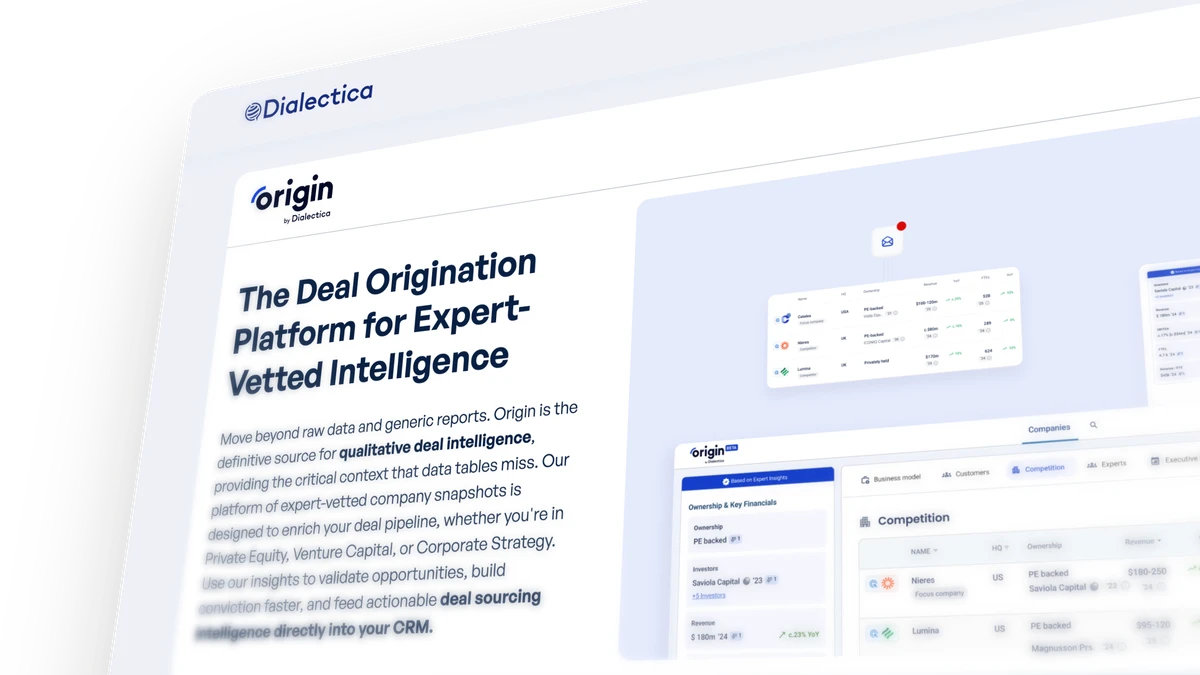
Dialectica needed to bring a company intelligence product to the public web: thousands of records, complex filtering, programmatic SEO and a freemium data-masking layer, all living inside the same Webflow domain structure.
Fred built it as an Astro application on Webflow Cloud with Neon for structured data. The first public version shipped in under two months, with 1.500+ company pages live and an architecture ready for 10.000+ records.
The lesson is simple: when Webflow is the right place for the brand, but not the right place for the data, build the application layer around it.
Dialectica Origin shows Webflow Cloud as a data-product layer. Dialectica Careers shows Webflow Cloud as an API-driven job board and application flow around Webflow.
Indicative investment Scoped around complexity and risk.
Every project is scoped around complexity, responsibility and delivery risk, not just page count. These ranges help teams understand whether there is a realistic fit before we spend time preparing a detailed proposal.
Focused builds can be quoted directly when the workflow is clear. Projects involving data models, integrations, authentication, migrations or unclear platform choices usually begin with a paid technical discovery phase.
Fit The right scale for focused product layers.
Large agency / dev shop
Best for larger teams, larger budgets and longer programmes where the product roadmap needs a full delivery organisation.
Low-cost freelancer
Useful for small implementation tasks, but riskier when the work needs product architecture, data modelling, launch judgement and clean handoff.
GOMO Digital
A good fit when the product layer is focused, the team values direct senior judgement, and the goal is to ship something useful without the overhead of a large product team.
Category fit When Webflow Cloud is part of the route.
Webflow Cloud development FAQ Common questions.
A Webflow Cloud product layer is focused application logic built around a Webflow site. Webflow can stay responsible for the brand and content experience, while Astro, React, APIs and databases handle data, filtering, dynamic routes or custom workflows.
Webflow app development means building a focused product layer around Webflow rather than forcing every workflow into the CMS. It can include API-driven pages, job boards, searchable directories, Webflow Code Components and custom application flows that still feel connected to the Webflow site.
Webflow Cloud applications and product layers start at €15.000. Typical projects range from €15.000 to €40.000+ depending on data complexity, integrations, authentication, search, filtering, CMS requirements and launch risk.
Yes. When the goal is to validate a focused product idea quickly, Webflow Cloud can be a practical way to build a first useful release without moving the whole marketing site into a heavier product stack. Dialectica Origin is an example of this approach.
Focused builds can be quoted directly when the workflow is clear. Projects involving data models, integrations, authentication, migrations or unclear platform choices usually begin with paid technical discovery and scoping.
Good fits include job boards, searchable directories, public or gated data products, API-driven listings, programmatic SEO systems, custom calculators, partner databases and focused application layers connected to a Webflow site.
No. The point is to use Webflow where it is strongest and move product logic where it belongs. Fred keeps Webflow for brand, content and visual control, then builds the application layer with the right supporting stack.
AI-assisted workflows help with code, debugging, test data and boilerplate. They do not replace judgement. Fred still decides what to build, what to cut, how to structure the system and where quality matters.
Lisbon, Portugal (GMT/WET timezone). GOMO works remotely with teams across Europe and beyond, with strong overlap for UK and European teams and reasonable overlap with US East Coast conversations.